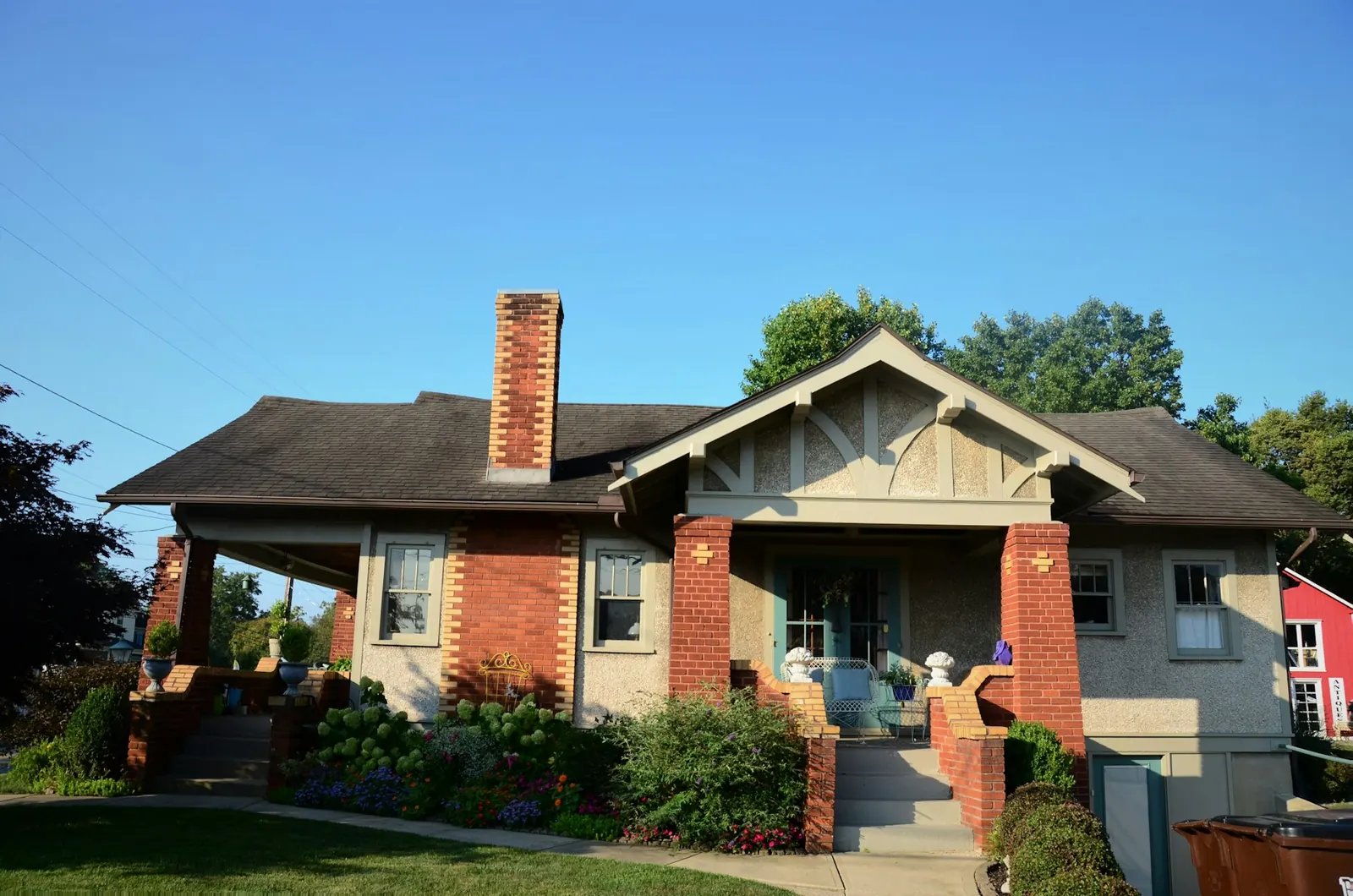
What happens to the water heater when a new furnace stops using the chimney?
It becomes an orphan: the only appliance left in a flue sized for two. The fuel gas code adopted in Minnesota says that when an appliance is permanently disconnected from a chimney, the chimney shall be resized as needed to control condensation and keep enough draft. In practice that usually means a metal liner sized to the water heater.
Minneapolis Fireplace & Chimney · November 8, 2026
How the orphan gets made
Many older homes in Minneapolis and St. Paul were built with one brick chimney that carried both the furnace and the water heater. ACS 2024 figures show 42.8 percent of Minneapolis homes and 41.6 percent of St. Paul homes were built before 1940, and the median home in each city dates to 1951 or 1952. Plenty of those chimneys have vented a gas furnace for decades without trouble, because the furnace sent a large volume of hot exhaust up the flue every time it ran.
A high-efficiency furnace changes that. It pulls so much heat out of its exhaust that the leftover gas is cool enough to run through plastic pipe, so the installer vents it out a side wall and caps the old connection. The water heater stays hooked to the chimney, now sending a small, cooler stream of exhaust into a flue that was sized for far more.
What the code says to do
Section 501.15 of the International Fuel Gas Code, part of the fuel gas code Minnesota adopts in chapter 1346, covers exactly this situation. It applies where an appliance is permanently disconnected from an existing chimney or vent. The key requirements:
- 501.15.1: the chimney or vent shall be resized as necessary to control flue gas condensation inside it and to give the remaining appliance enough draft.
- 501.15.2: the passage must be free of obstructions and combustible deposits, cleaned if it was used before, and any liner must be continuous and undamaged.
- 501.15.3: a masonry chimney flue needs a cleanout at least 6 inches high, with its top edge at least 6 inches below the lowest inlet.
- 501.15.4: clearances follow the building code, with reduced clearances allowed when the flue is lined with a system listed to UL 1777.
- Separately, Minnesota's amended 501.12 calls for an approved metallic liner in any masonry chimney that vents a gas appliance.
Why an oversized flue is a problem
A water heater's draft depends on the exhaust staying warm all the way to the top. In a big brick flue the exhaust slows down and cools against the walls, and on a cold day it may not rise well at all. When draft is weak, exhaust can spill back out at the water heater's draft hood into the basement. That is a carbon monoxide concern, which is why Minnesota law under Minn. Stat. 299F.51 requires a working CO alarm within 10 feet of every bedroom.
The other half is moisture. Cooler exhaust condenses sooner, and the water runs down the inside of the chimney. On the outside you may see white deposits on the brick or a stack that looks wet on dry days. Inside, mortar and clay tiles break down, and debris can pile up at the base of the flue and partly block it.
- Warm, damp air at the draft hood when the water heater fires.
- Rust, scale or tile chips at the chimney cleanout.
- Water stains on the basement wall near the chimney.
- White staining or flaking brick on the upper part of the stack.
- A CO alarm that chirps or goes off in the basement or on the first floor.
The usual fix
Most often the answer is a metal liner sized to the water heater, run from the connection to the top of the chimney with a cap. The smaller passage keeps the exhaust warm and moving. An aluminum liner for gas appliances runs $625–$2,250 installed, and a stainless steel liner runs $900–$3,800, by the HomeGuide ranges we print.
Some owners skip the chimney entirely by switching to a power-vented or direct-vent water heater. That is a plumbing and appliance decision with its own costs. If that is the plan, the old flue can be capped and left alone, or removed later. We will tell you both options at the inspection and let you choose.
When to call
The best time is right after the furnace swap, before a winter of condensation does its work. Our inspection is free: we check the water heater connection, look down the flue from the roof, photograph what we see and write down the price before anything is done. Minneapolis requires a mechanical permit for most heating and gas work, and we check what your city requires before scheduling.
FAQ
More answers
Didn't the furnace installer handle this?
Sometimes, not always. The furnace job is often scoped to the furnace. Ask whether the water heater venting was checked and resized, and if the answer is unclear, have the flue looked at.
Is an orphaned water heater dangerous?
It can be if the draft fails and exhaust spills into the house. That is why the resizing rule exists, and why a working CO alarm near the bedrooms matters in every Minnesota home.
Can the new liner go in the same flue the furnace used?
Usually yes. The liner runs inside the existing flue, connects to the water heater and ends at a cap on top. A liner sized to the water heater is far smaller than the old flue.
Keep reading
More from the blog
 Does Minnesota require a metal liner for a gas furnace or water heater in a brick chimney?What Minn. R. 1346.5501 says about metal liners in brick chimneys that vent a gas furnace or water heater, which liners qualify, and what relining costs.
 Is the winter leak in my ceiling an ice dam or the chimney?Water on the ceiling after a thaw can be an ice dam or a leaking chimney. Where the stain shows, what UMN Extension says about ice dams, and what each repair costs.
 How does Minnesota's freeze-thaw cycle damage a chimney crown?Why the concrete crown on top of a brick chimney in the metro cracks, how often MSP swings across freezing, and when to repair or replace.
Book online
Choose a day. We'll bring the ladder.
Free inspection in a 3-hour arrival window: 8 to 11, 11 to 2, or 2 to 5, Sunday through Friday. We phone to confirm before we come.