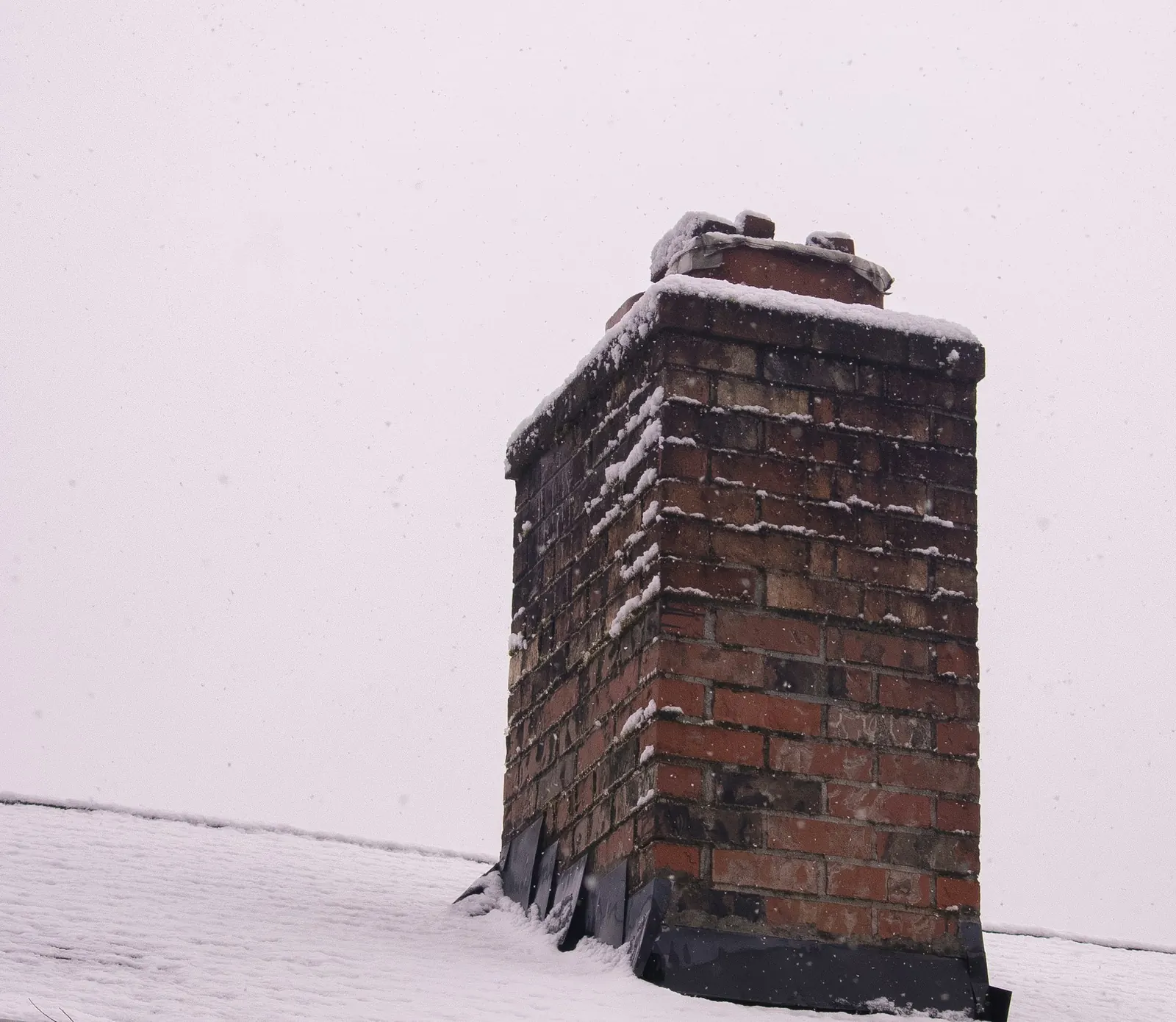
How does Minnesota's freeze-thaw cycle damage a chimney crown?
The crown is the concrete or mortar top of a brick chimney. Water gets into small cracks, freezes overnight and expands, then thaws by day and seeps deeper. By our count from NOAA normals, the MSP airport sees about 75 of those swings a year, and the north metro roughly 90. Small cracks caught early run $200–$700+ to repair; a new crown runs $1,000–$3,000.
Minneapolis Fireplace & Chimney · November 4, 2026
Where the 75 comes from
NOAA publishes 1991–2020 climate normals for weather stations across the metro. For the MSP airport, the normals show about 147 nights a year when the low drops to 32°F or below, and about 72 days when the high never gets above freezing. Subtract the second number from the first and you get roughly 75 days a year that freeze at night and thaw during the day. That is our own arithmetic on two NOAA fields, not a figure NOAA reports, but it gives a fair sense of the strain on outdoor masonry.
The number climbs north of the cities. At the Andover station in Anoka County, the same subtraction gives roughly 90 days, along with about 39 nights a year at or below zero compared with about 22 at MSP. Homes in Andover, Anoka and nearby towns likely see more of these cycles than homes along the river in Minneapolis.
What a crown is supposed to look like
The current Minnesota Residential Code follows IRC R1003.9.1: masonry chimneys shall have a concrete, metal or stone cap, sloped to shed water, with a drip edge and a caulked bond break around any flue liner. Masons call that cap the crown.
Each part has a job. The slope sends water off the top instead of letting it pool. The drip edge, an overhang with a groove or lip underneath, lets water fall clear instead of running down the brick face. The bond break lets the flue tile and the crown expand at different rates without cracking each other.
- A flat crown that holds puddles after rain.
- A thin wash of mortar troweled over the top bricks, with no overhang.
- Hairline cracks radiating out from the flue tiles.
- Chunks missing from the corners, or a crown you can see sitting loose.
- Rust-colored or white staining running down the upper bricks.
How the damage builds
A thin mortar wash is the most common crown on older Twin Cities houses, and it is the one that fails first. Once water gets into a crack, each freeze pushes the crack a little wider. Water then reaches the bricks and mortar joints below, and the same freeze-thaw cycle starts to pop the faces off the brick, which masons call spalling.
Extreme cold adds stress of its own. The MN DNR climate office records a low of −28°F at MSP on January 30, 2019, with wind chills near −55°F. A wet crown going through a stretch like that, then into a February thaw, is how a small crack becomes a loose slab.
Repair or replace
If the crown is sound with only fine cracks, a crack repair with a flexible crown sealer can add years. That typically runs $200–$700+. If the crown is flat, has no drip edge, is broken through or loose, or the bricks under it are already spalling, replacement is the better buy. A new crown formed with a proper slope, drip edge and bond break typically runs $1,000–$3,000.
A cap with a screen over the flue keeps rain and snow out of the chimney itself and protects the new crown around the tiles. A cap installed runs $200–$850. A breathable water repellent on the brick below, $150–$820+, helps the masonry dry out between freezes.
When to have it looked at
Late summer and early fall are the best time, before the first hard freeze. A crack that is open in October will be worse by April. Our inspection is free: we go up on the roof, photograph the crown, the flue tiles and the top courses of brick, and give you a written price for what needs doing.
FAQ
More answers
Can I just put caulk on my crown cracks?
Ordinary caulk will not hold up long on a crown. Products made for crowns are flexible and bond to masonry; they work on fine cracks, not on a crown that is broken through.
How long should a new crown last?
A properly built crown with a slope and a drip edge lasts far longer than a mortar wash. How long depends on the materials and how well the top is protected, which we explain at the inspection.
Does a chimney cap replace the crown?
No. A cap covers the flue opening; the crown covers the masonry. Some full-width covers protect both, but the crown still needs to be sound under them.
Keep reading
More from the blog
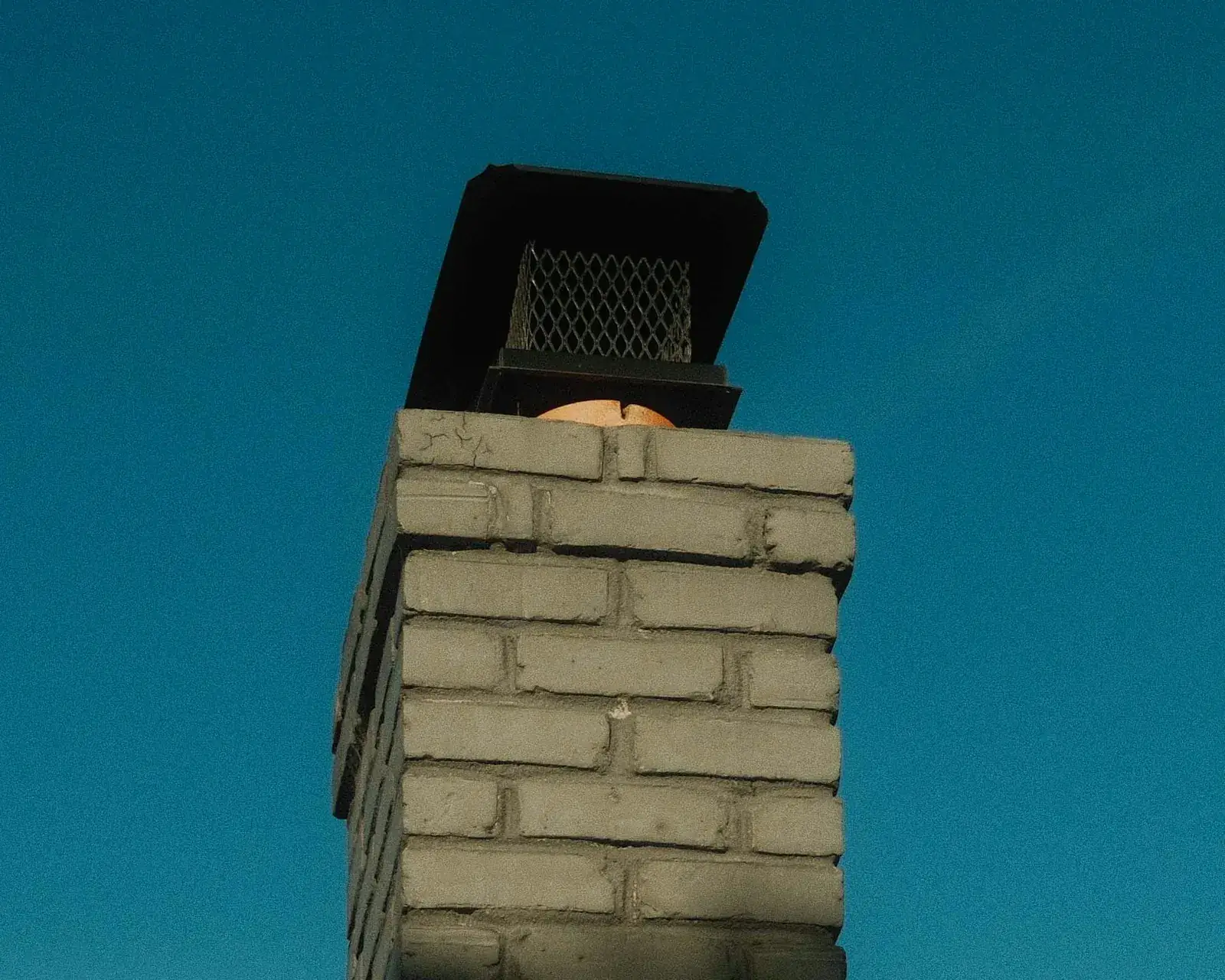 Does Minnesota require a metal liner for a gas furnace or water heater in a brick chimney?What Minn. R. 1346.5501 says about metal liners in brick chimneys that vent a gas furnace or water heater, which liners qualify, and what relining costs.
 What happens to the water heater when a new furnace stops using the chimney?A new side-vented furnace can leave the water heater alone in an oversized brick flue. What IFGC 501.15 says about resizing, and how the fix works in Twin Cities homes.
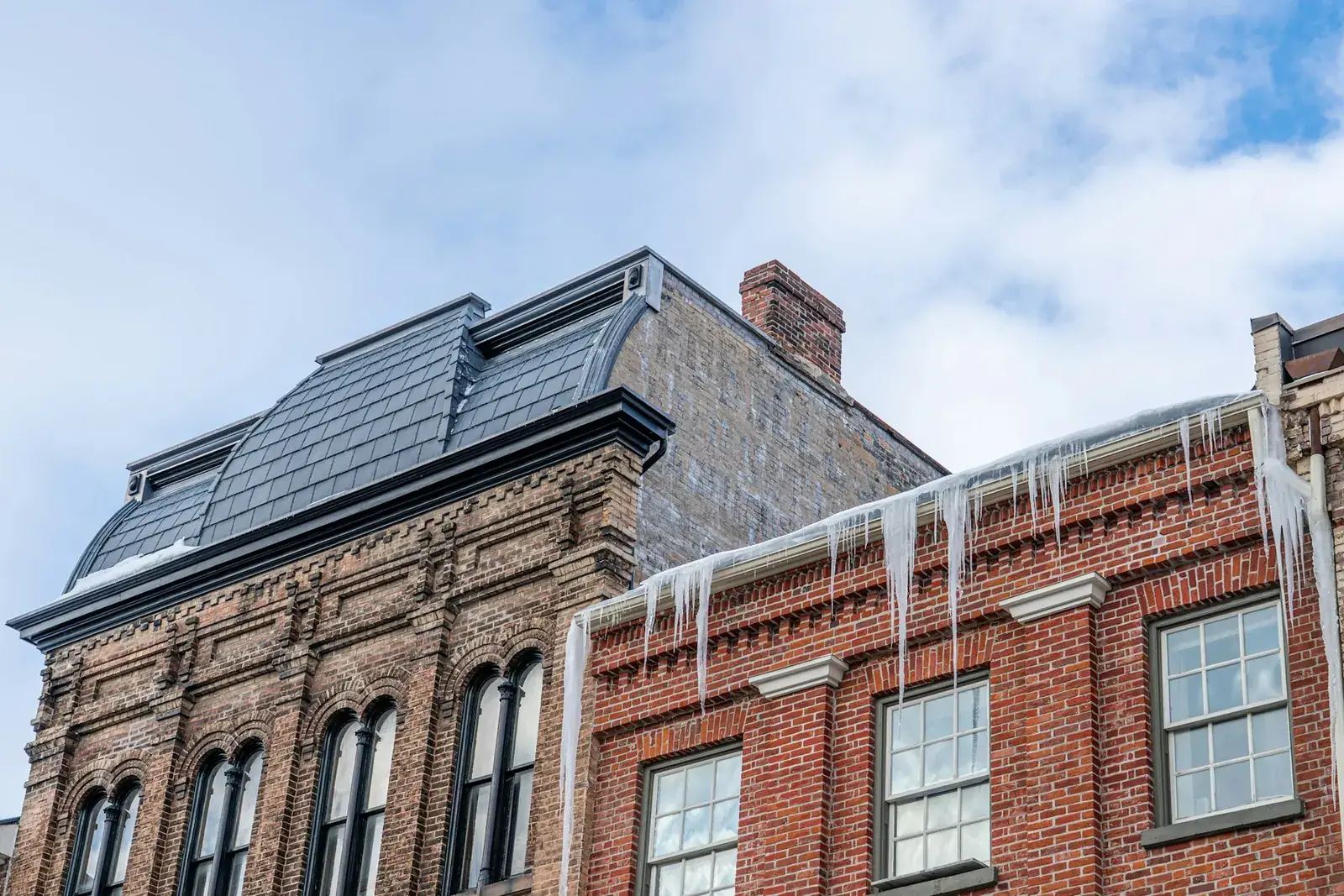 Is the winter leak in my ceiling an ice dam or the chimney?Water on the ceiling after a thaw can be an ice dam or a leaking chimney. Where the stain shows, what UMN Extension says about ice dams, and what each repair costs.
Book online
Choose a day. We'll bring the ladder.
Free inspection in a 3-hour arrival window: 8 to 11, 11 to 2, or 2 to 5, Sunday through Friday. We phone to confirm before we come.