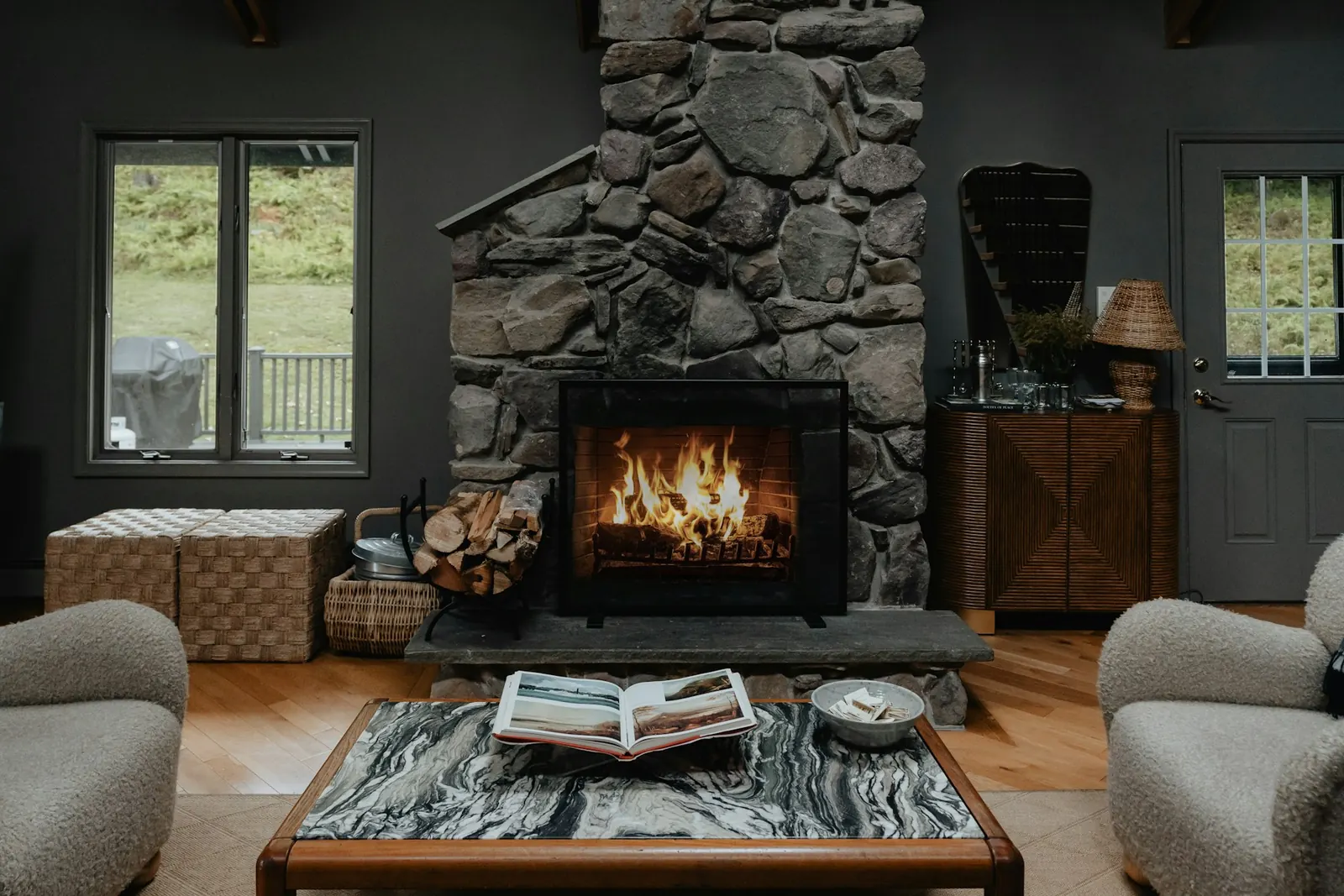
Top-Sealing Dampers for Drafty Fireplaces
A damper that seals the top of the flue instead of the throat, so cold air and smells stop coming down the chimney. Top-mount damper caps typically $140 to $420.
An open or poorly sealed fireplace damper is a hole in the house. MSP runs up 7,399 heating degree days a year on NOAA's 1991–2020 normals, and the north metro more than 8,000, so warm air escaping up an unused flue costs real money for half the year. The cast-iron throat dampers in most older Minneapolis and St. Paul fireplaces were never airtight to begin with, and after decades of heat and rust many no longer close at all.
A top-sealing damper moves the seal to the top of the chimney. A spring-loaded lid with a gasket sits on the flue, and a stainless cable runs down to a handle in the firebox. Close it and the flue is shut at the top; open it and it pops up and acts as a cap. It also keeps rain, animals and the cold column of air in the flue out of the house when the fireplace isn't in use.
Signs you need this
- Cold air you can feel at the fireplace in winter
- A damper handle that won't move or won't stay shut
- A sooty or smoky smell when the fireplace hasn't been used
- Rust flakes falling into the firebox
- A fireplace that has no cap and no working damper
How we do it
- Inspect the damper and flue, freeWe check the throat damper, the smoke shelf and the top of the flue to see whether repair or a top damper makes more sense.
- Fit a top-sealing damperThe damper is sized to the flue, mounted on the tile or crown, and its cable is routed to a bracket inside the firebox.
- Or repair the throat damperSome cast-iron dampers just need a new pin, handle or frame adjustment, priced at the inspection.
- Show you how it worksWe walk you through opening it before every fire and checking it on very cold mornings.
Why top-sealing dampers suit a cold climate
A throat damper sits low in the chimney, so even when it's shut, the whole flue above it fills with cold air that chills the fireplace and leaks into the room around the damper plate. A top damper keeps that column of air warm and sealed. It also cuts some of the warm air that can reach the attic around an older chimney; the University of Minnesota Extension lists heat escaping from fireplaces and chimneys among the causes of uneven roof temperatures that lead to ice dams.
What to know before you buy one
A top damper is simple, but a few things decide whether it's right for your fireplace.
- Always open it fully before lighting a fire
- On below-zero mornings ice can hold the lid shut; check that it opens before a fire
- If the fireplace has a gas log set, the flue must stay open whenever the logs burn, so we follow the log set's instructions before fitting anything
- It can't be used on a flue that vents a furnace or water heater
- Top-mount damper caps typically run $140 to $420 installed (national 2026 guides)
FAQ
Top-Sealing Dampers questions
Can you use a fireplace without a damper?
You can burn a fire with no damper, but when the fireplace is off the flue stays open to the outside, which lets in cold air, rain and animals. A top-sealing damper fixes that without changing how the fireplace burns.
Why does my fireplace smell when I'm not using it?
Often the house is pulling air down the chimney, bringing soot and creosote smell with it. Sealing the flue at the top usually stops it. The inspection checks for other causes, like water in the flue.
Should I repair my old damper or replace it?
If the cast-iron plate and frame are solid, a repair can be cheaper. If the plate is warped or rusted through, a top damper usually seals better than a new throat damper would.
Does a top damper work as a chimney cap?
Most do, with a hood and mesh over the lid that keep out rain and animals when it's open. We confirm that for the model we fit.
Related
Liners, chases, caps and fireboxes
Book online
Choose a day. We'll bring the ladder.
Free inspection in a 3-hour arrival window: 8 to 11, 11 to 2, or 2 to 5, Sunday through Friday. We phone to confirm before we come.