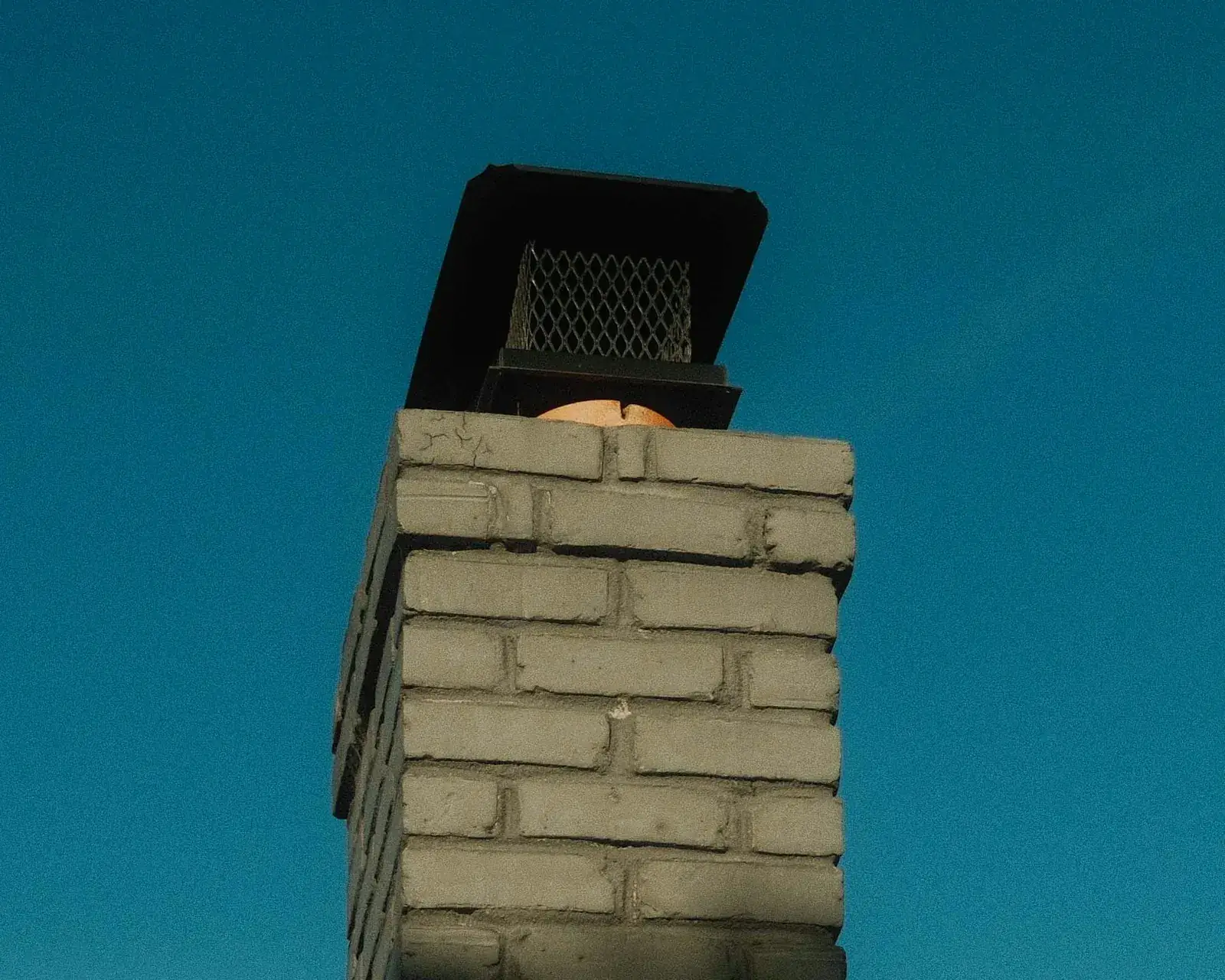
Furnace and Water Heater Liners for Minnesota Chimneys
Minnesota's fuel gas rule says a masonry chimney venting a gas appliance needs a metal liner. We size it to what is still connected, often a water heater left alone after a furnace upgrade. Aluminum $625 to $2,250, stainless $900 to $3,800.
Most of the older housing in the metro still sends gas exhaust up a brick chimney. The American Community Survey counts 42.8% of Minneapolis homes and 41.6% of St. Paul homes as built before 1940, and natural gas heats somewhere between 58% and 88% of homes in every metro city it lists. In those houses the furnace, the water heater or both are usually connected to the same masonry stack the house was built with, and that stack was never designed for the cool, wet exhaust a modern gas appliance puts out.
Minnesota answers that in its fuel gas code. Minn. R. 1346.5501 amends the International Fuel Gas Code to say that an approved metallic liner shall be installed in masonry chimneys used to vent gas appliances. It sets the materials and thicknesses, it bars connecting any appliance to a flue that serves a fireplace, and a related amendment (503.5.6) says existing chimneys are to be lined the same way unless the building official approves otherwise. This page explains the rule, the situation that trips most homeowners up, and how we size and install the liner.
Signs you need this
- A new high-efficiency furnace vents out the side of the house, but the water heater still goes into the chimney
- White salt streaks or wet, flaking brick on the outside of the chimney in winter
- Rust, water drips or scorch marks at the water heater's draft hood
- Crumbled tile or mortar collecting at the chimney cleanout or the base of the flue
- A carbon monoxide alarm going off, or a headache that eases when you leave the house
How we do it
- Trace the flues, freeWe identify every appliance tied into the chimney, look up each one's rating plate and check the flue from the top and the cleanout, with photos.
- Size the liner to what's connectedWe size the liner to the input of the appliances that will actually use it, using the venting tables the fuel gas code relies on, and pick aluminum or stainless to fit the job.
- Check what your city requiresLiner work is mechanical work in many metro cities. We check what your city requires and schedule around it.
- Install top to bottomThe liner drops from the crown to the appliance connection, sealed at both ends, with a termination cap on top and a proper connection to the vent connector.
- Prove the draftWith the appliances firing, we test that exhaust goes up the liner and nothing spills at the draft hood, then leave you photos of the finished install.
What Minn. R. 1346.5501 actually says
The rule is short and specific. Minnesota's amended section 501.12 requires an approved metallic liner in any masonry chimney used to vent gas appliances, and it gives three ways to meet it:
- Aluminum (1100 or 3003 alloy or equal) at least 0.032 inch thick, for liners up to 8 inches in diameter
- Stainless steel (304 or 430 or equal) at least 26 gauge (0.018 inch) up to 8 inches in diameter, and at least 24 gauge (0.024 inch) at 8 inches and larger
- A listed vent system
- The only exception is for appliances each rated over 400,000 Btu per hour, which rules out every house furnace and water heater
- Amended section 501.7: no appliance may be connected to a chimney flue that serves a fireplace
The orphaned water heater after a furnace upgrade
This is the job we see most. An older furnace and a gas water heater share a large clay-lined or unlined flue. The furnace is replaced with a high-efficiency model that vents through plastic pipe out the side wall, and the water heater is left behind on its own in a flue sized for both. A typical water heater puts out a fraction of the heat the old furnace did, and that small, cool stream of exhaust can't warm a big masonry flue on a January night. The water vapor in it condenses on the cold walls, the draft weakens and exhaust can spill back out at the draft hood.
The fuel gas code adopted in Minnesota covers exactly this. IFGC 501.15 applies where an appliance is permanently disconnected from an existing chimney, and 501.15.1 says the chimney shall be resized as necessary to control flue gas condensation and give the remaining appliance enough draft. The next subsections ask that a previously used flue be cleaned and the liner be continuous, and that a masonry flue have a cleanout at least 6 inches high with its top edge at least 6 inches below the lowest inlet. In practice, a liner sized to the water heater is the usual way to meet all of it.
If you're planning a furnace replacement, call us before the HVAC crew comes, not after. It's easier for everyone when the liner is sized and scheduled alongside the furnace job.
Why our winters make this worse
Condensation in a flue is a cold-weather problem, and the Twin Cities have plenty of cold. NOAA's 1991–2020 normals put MSP at about 147 nights a year at or below freezing, about 22 at or below zero and 7,399 heating degree days; the Andover station in the north metro averages about 39 nights at or below zero and 8,283 heating degree days. On January 30, 2019, the Minnesota DNR recorded −28°F at MSP. A chimney on an outside wall gives up its heat fast in that weather, and every cycle of the water heater wets the inside of the flue.
That moisture soaks the mortar and clay tile from the inside, and the freeze-thaw cycles outside, roughly 75 days a year at MSP by our count from the NOAA normals, finish the job. The white streaks and flaking brick many homeowners blame on the weather often start inside the flue.
Aluminum or stainless, and what each costs
Both meet the Minnesota rule when they're the right thickness. Aluminum liners are used for gas appliances only and typically cost $625 to $2,250 installed in 2026 according to national cost guides, with a shorter expected life. Stainless steel liners typically run $900 to $3,800 installed, last longer and can also serve oil or solid fuel if the chimney's use changes later. In a two-flue stack where one flue serves a fireplace, the gas appliances must stay in their own lined flue; the fireplace flue is off limits under amended 501.7.
Duplexes deserve a note: the American Community Survey counts 8.1% of Minneapolis and 6.3% of St. Paul housing units in two-unit buildings, and many of those have two furnaces and two water heaters going into one stack. Each connected appliance gets checked and each flue gets sized on its own.
FAQ
Furnace & Water Heater Liners questions
Do I need a chimney liner for a gas furnace in Minnesota?
If the furnace vents into a masonry chimney, yes. Minn. R. 1346.5501 requires an approved metallic liner in masonry chimneys used to vent gas appliances: aluminum at least 0.032 inch thick up to 8 inches, stainless at least 26 or 24 gauge by diameter, or a listed vent system.
My new furnace vents out the side wall. Is my water heater OK?
Have it checked. The fuel gas code adopted in Minnesota (IFGC 501.15) says that when an appliance is permanently disconnected from a chimney, the chimney must be resized as needed to control condensation and keep enough draft. A water heater left alone in a big, cold masonry flue is the textbook case.
Can my furnace share the flue with my fireplace?
No. Minnesota's amended IFGC 501.7 prohibits connecting any appliance to a chimney flue that serves a fireplace. The furnace and water heater need their own properly lined flue.
How much does a water heater chimney liner cost?
Aluminum gas liners typically run $625 to $2,250 installed and stainless liners $900 to $3,800, per national 2026 cost guides. Height, flue size and access set where yours falls. The inspection that decides it is free.
Where do carbon monoxide alarms have to be?
Minn. Stat. 299F.51 requires an approved, working CO alarm within 10 feet of every room used for sleeping, in every single-family home and every unit of a multifamily building. If you ever smell gas, leave the house, then call 911 and your gas utility from outside.
Related
Liners, chases, caps and fireboxes
Book online
Choose a day. We'll bring the ladder.
Free inspection in a 3-hour arrival window: 8 to 11, 11 to 2, or 2 to 5, Sunday through Friday. We phone to confirm before we come.