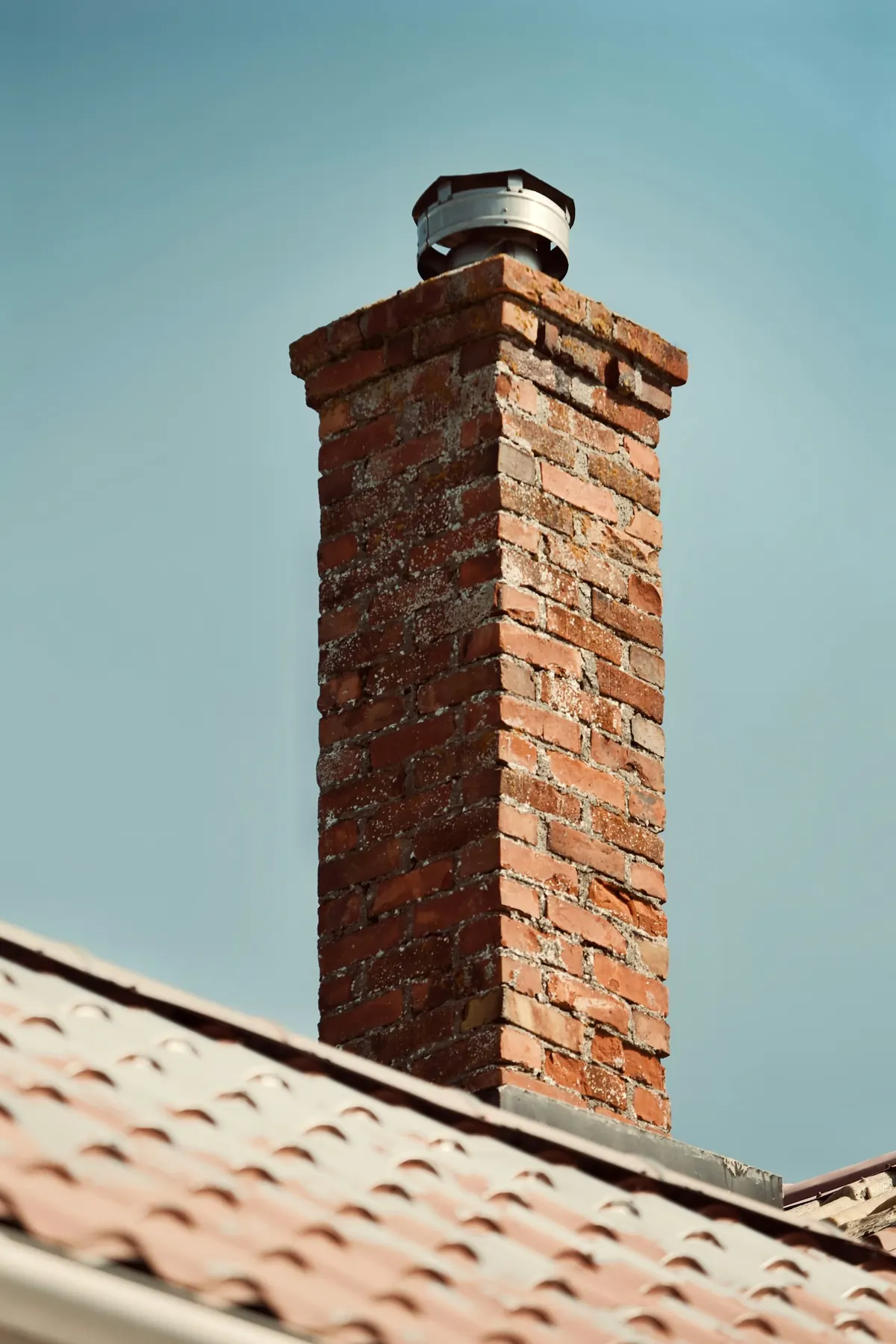
Chimney Waterproofing That Lets Brick Breathe
A clear, vapor-permeable repellent that keeps snowmelt from soaking into the brick and lets trapped moisture dry out. Applied over sound masonry, typically $150 to $820+.
A brick chimney in the metro is wet for a large part of the year. NOAA's 1991–2020 normals put the airport at 51.2 inches of snow a year with about 90 days of an inch or more on the ground, and every flake that lands on the roof sits against the stack until it melts. Using the same normals, we count roughly 75 days a year at MSP when the overnight low freezes and the afternoon climbs back above 32°F, and closer to 90 in the north metro around Andover. Each of those days, water that soaked into the brick in the afternoon turns to ice that night.
Waterproofing slows that cycle down at the source. A good masonry repellent soaks into the brick and the mortar, so rain and meltwater bead up and run off the face, but water vapor coming from inside the chimney can still pass out through the pores. It does not close a crack or fill an empty joint, which is why we treat it as the last step of a repair and never as a substitute for one.
Signs you need this
- Brick that stays dark for days after a thaw
- White salt bloom (efflorescence) spreading on the stack
- Faces of bricks flaking off when the snow melts in March
- A brown stain on the ceiling or wall beside the chimney
- Sand-like mortar you can scratch out with a key
How we do it
- Free inspection firstWe go over the crown, cap, flashing, mortar and brick faces, take photos and write down what each fix costs before anything is coated.
- Close the openingsOpen joints, crown cracks and loose flashing get repaired first and priced on their own lines, so the repellent is never asked to stop a real leak.
- Wait for dry brick and warm airThe product only soaks into dry masonry above freezing, so coating work goes on the calendar for a dry stretch, usually late spring through early fall.
- Saturate each faceWe work top down, flooding every side until it stops taking product, with shingles, siding and windows covered.
- Check it next visitAt later inspections we spray the brick and watch whether water still beads or has started to soak in again.
Why we use a breathable repellent, not paint or a film sealer
Water reaches a chimney from inside as well as outside. A gas furnace or water heater sends water vapor up the flue with every cycle, and on a below-zero night (MSP averages about 22 of them a year, per NOAA) that vapor cools fast inside the masonry. A paint or glossy sealer on the outside holds that moisture in the brick. When it freezes behind the film, the face of the brick breaks off and takes the coating with it.
A breathable product cuts the water coming in from rain and snow without sealing the surface shut, so the stack can still dry out between storms. On the soft, older brick common in Minneapolis and St. Paul, where the Census Bureau's American Community Survey counts more than 4 in 10 homes as built before 1940, that difference matters more than it does on newer hard brick.
Ice dams, snow piles and the base of the chimney
The University of Minnesota Extension explains that ice dams form when uneven roof temperatures melt snow that then refreezes at the cold edge of the roof, and it names frequent fireplace and wood stove use as one way heat gets into the attic. Snow that drifts against the uphill side of a chimney melts and refreezes the same way, which keeps the lower courses of brick wet for weeks.
Waterproofing helps the brick shed that water, but it cannot stop meltwater running behind loose flashing or pooling where a wide chimney has no cricket. The current Minnesota Residential Code calls for a cricket when the side of the chimney parallel to the ridge is more than 30 inches wide (IRC R1003.20), and we point it out if yours is missing.
What it costs and what it does not fix
Breathable waterproofing typically runs $150 to $820+ in 2026, based on national cost guides, depending on the height of the stack, the roof pitch and how much brick is exposed. Your number is written down at the free inspection. If the mortar needs repointing first, that is a separate line, and in a St. Paul Historic Preservation Area the city's permit handout says exterior repairs such as tuckpointing need a permit regardless of cost, so we check what your city requires before scheduling.
- It will not seal a cracked crown
- It will not stop a flashing leak
- It will not fill recessed or missing mortar joints
- It will not fix water coming in through an uncapped flue
FAQ
Chimney Waterproofing questions
Can a chimney be waterproofed in a Minnesota winter?
Not properly. The repellent has to soak into dry masonry above freezing, and the airport sees about 147 nights a year at or below 32°F on NOAA's normals. We repair an active leak whenever the weather allows and save the coating for a dry, mild stretch.
Will waterproofing fix my leak?
Only when water is coming straight through the brick. More often the leak starts at the crown, the flashing or an open flue with no cap. The free inspection finds the entry point before you pay for a coating.
Is it safe on old soft brick?
A breathable, masonry-rated repellent is the only kind we use on older brick. Paint and film sealers trap moisture, and in our winters trapped moisture freezes and spalls the brick face.
Does waterproofing change the color of the brick?
A penetrating repellent dries clear with little or no shine. On a house in a Minneapolis or St. Paul historic district, ask city preservation staff before any exterior treatment; we help you prepare photos and a scope for that review.
How often does it need to be redone?
Repellents wear with sun and weather. We check how the brick sheds water at each later inspection and tell you when it has stopped beading, rather than setting a fixed schedule.
Related
Masonry, leaks and rebuilds
Book online
Choose a day. We'll bring the ladder.
Free inspection in a 3-hour arrival window: 8 to 11, 11 to 2, or 2 to 5, Sunday through Friday. We phone to confirm before we come.