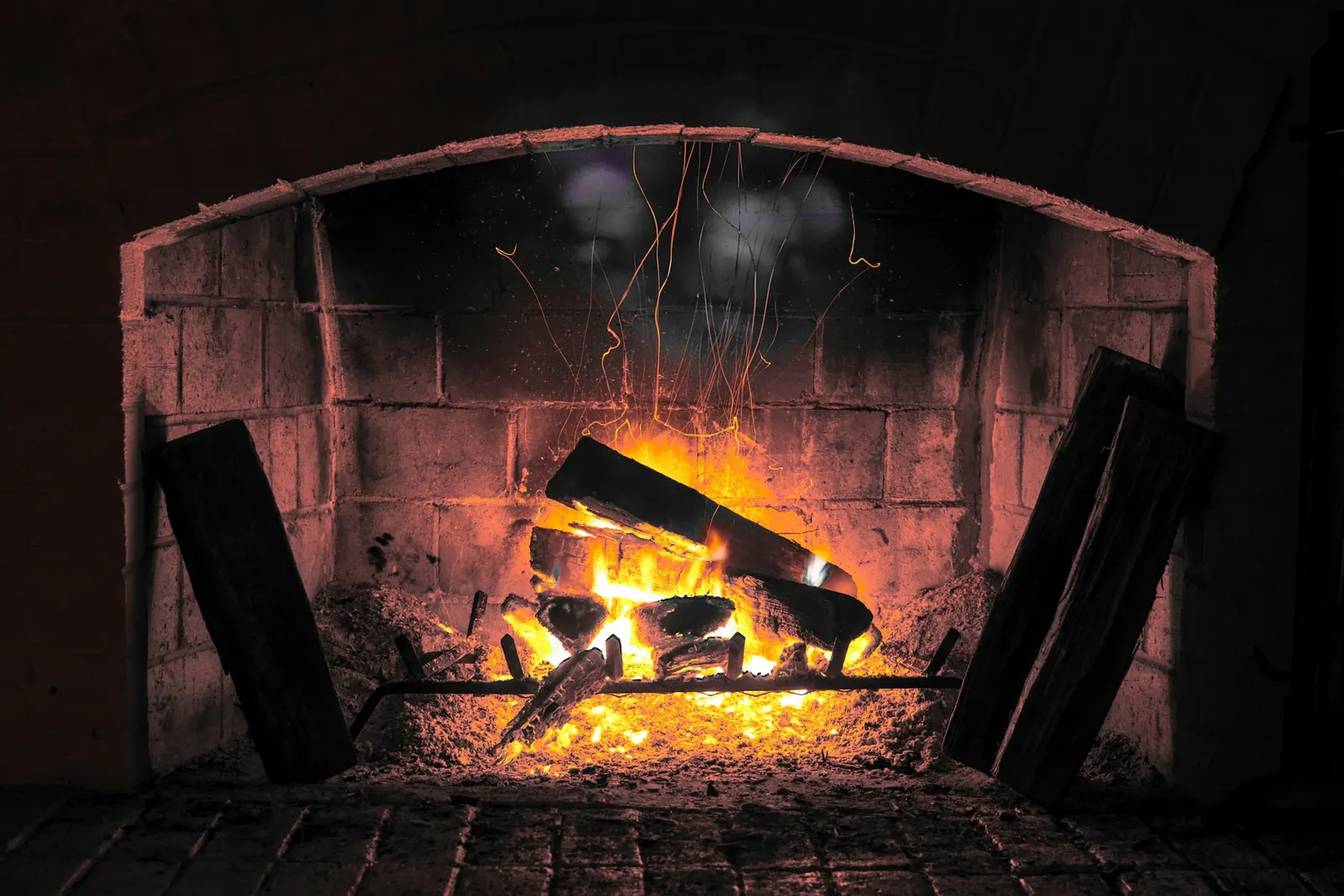
Creosote Removal for Fireplaces and Stoves in the Twin Cities
Some creosote brushes off. The hard, shiny kind does not, and it is the fuel behind most chimney fires. We find out which you have at a free inspection and price the right removal method.
Creosote forms when wood smoke cools enough to condense on the inside of the flue. It starts as soft, flaky soot, turns crunchy and tar-like if it is left, and in the worst case hardens into a glossy glaze that sticks to the liner like enamel. Each stage burns hotter than the last when a chimney fire gets going. In a cold climate the outside wall of an exterior chimney can stay chilled for months, which is exactly the condition that lets smoke condense.
We look at what you have before we name a price. Loose deposits come out with the normal sweep. Hardened or glazed layers need rotary tools or a chemical treatment that breaks the glaze down over one or more visits. We show you photos, explain the stage, and write down what removal will cost. If the flue liner turns out to be cracked underneath, you hear about that too.
Signs you need this
- A shiny black coating on the damper or the first foot of the flue
- Puffy, honeycomb-like flakes on the roof or the smoke shelf
- A strong tar smell in the room, worse in warm, humid weather
- Fires that smolder and smoke rather than burn bright
- Loud roaring or crackling from the flue during a fire at some point in the past
How we do it
- Find the stageAt the free inspection we check how thick and how hard the deposits are, top and bottom.
- Choose the methodBrushes for loose soot, rotary heads for hard layers, a chemical treatment for glaze. We explain why.
- Write the priceYou get the removal price in writing, including whether a second visit is likely.
- Remove and vacuumThe firebox is sealed off, the deposits come out and the debris goes into our vacuum, not your living room.
- Check the linerOnce it is clean we look at the liner again, because glaze can hide cracks from a past fire.
What makes creosote build up faster here
Most of the fireplaces we see are used for comfort, not heat. Short fires, damp wood and a damper left half closed all cool the smoke before it leaves. An outside chimney on a north wall adds to it. With about 72 days a year at MSP when the high never climbs above freezing, according to NOAA, those cold brick walls do a lot of condensing.
Stoves and inserts shut down for an overnight burn are the other big source. A slow, low fire is exactly the condition that lays down glaze.
- Firewood that has not dried for at least a season
- Slow overnight burns with the air turned down
- A liner too big for the stove or insert venting into it
- An exterior chimney with no insulation around the flue
Why glaze is treated as a fire risk
Glazed creosote is concentrated fuel stuck to the inside of a chimney. If it lights, a flue fire can crack clay tiles and reach wood framing through gaps in the masonry. NFPA 211's yearly inspection is meant to catch it before then. After any chimney fire, have the flue looked at before using it again.
FAQ
Creosote Removal questions
Can a regular sweep remove creosote?
It removes loose soot and flaky creosote. Hardened deposits and glaze need rotary tools or a chemical treatment, which is why we check the stage first.
What does creosote removal cost?
It is priced at the free inspection once we have seen how thick and how hard the deposits are. Glaze can need more than one visit, and we tell you that up front.
Are creosote logs enough?
They can loosen some soft deposits, but they do not remove them and they do nothing for glaze. Treat them as a help between sweeps, not a replacement.
Is it safe to keep using the fireplace until you come?
If you see shiny glaze or have heard roaring in the flue, stop using it until it has been looked at. Otherwise, burn small, hot fires with dry wood.
Related
Cleaning, inspections and smoke
Book online
Choose a day. We'll bring the ladder.
Free inspection in a 3-hour arrival window: 8 to 11, 11 to 2, or 2 to 5, Sunday through Friday. We phone to confirm before we come.