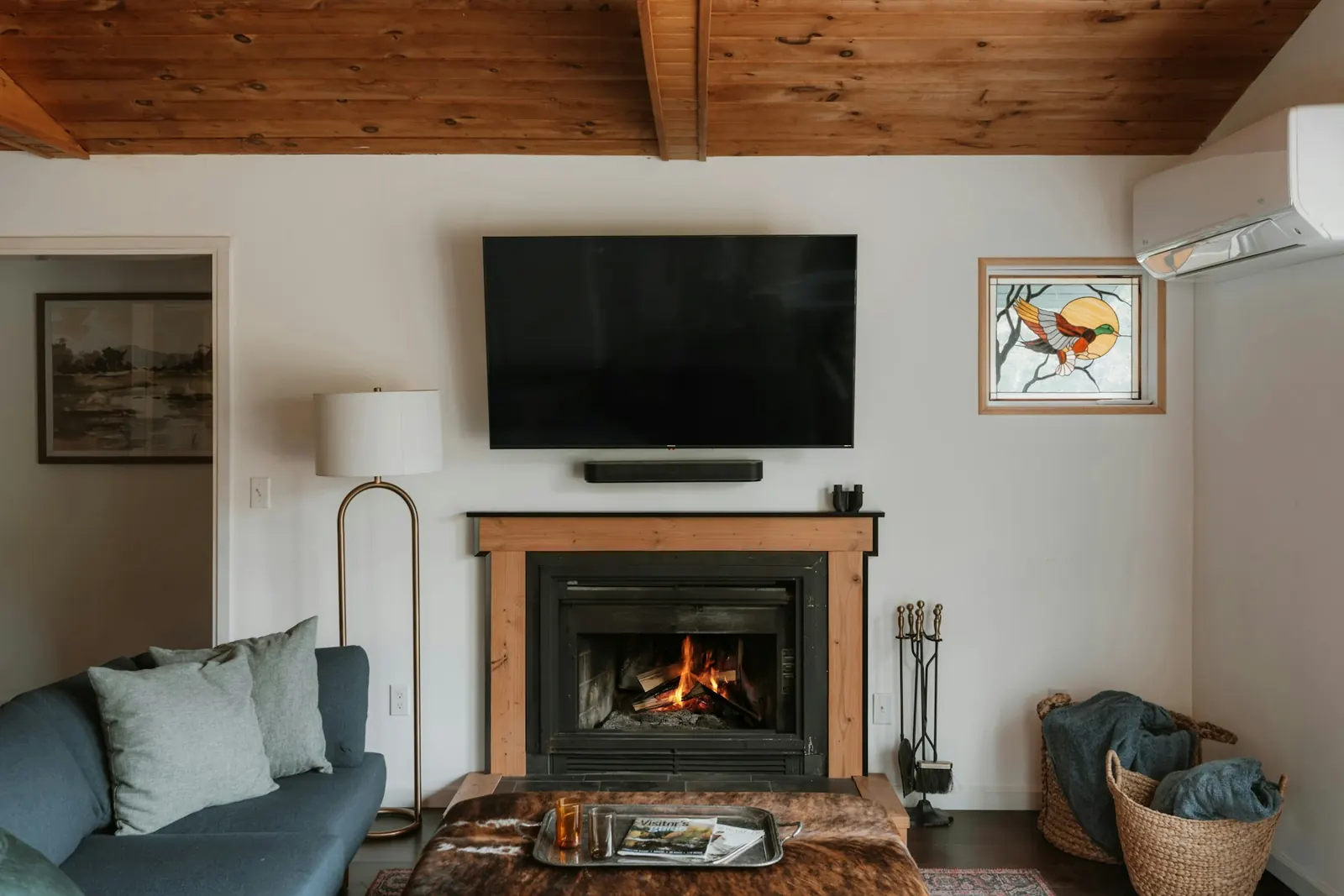
Gas Inserts and Log Sets for Old Fireplaces
Turn a drafty wood fireplace into a gas fire that lights with a switch. A sealed direct-vent insert for real heat, or a log set for the look. Inserts typically $2,000 to $5,000; log sets $300 to $2,000.
Hardly anyone in the metro heats with wood any more. The American Community Survey counts wood as the main heating fuel in well under 1% of homes in every metro city it covers, so most fireplaces here are for evenings and holidays. For a lot of owners, that makes gas the easier fit: no hauling or storing wood, no ashes, and a fire that starts with a switch on a minus-ten night.
There are two main options. A gas insert is a sealed metal firebox with a glass front that slides into the existing masonry fireplace and vents through new liners run up the chimney. It heats the room. A gas log set is a burner and ceramic logs placed in the open fireplace. It looks like a wood fire but sends most of its heat up the flue. We help you choose based on how you want to use the fireplace.
Signs you need this
- You use the fireplace for looks and want less work
- The room gets colder when the wood fireplace is going
- The masonry fireplace needs repair and you're weighing options
- You want a fire you can light with a remote
- An older gas log set that won't light reliably
How we do it
- Measure and quote, freeWe measure the firebox opening and depth, check the chimney and the flue, and see where gas can be brought to the fireplace.
- Choose the unitWe walk through insert sizes, heat output, controls and log styles that fit your opening.
- Prepare the chimneyThe flue is swept if it served wood, damage is repaired, and the liners for the insert are planned to the top.
- Install and ventThe insert goes in with its liners run full height and capped, the gas connection is made and the surround is finished.
- Light and show youWe run it, check the flame and the venting and show you the controls and the yearly care.
Insert or log set: what's the difference
An insert is the choice if you want heat. It's a sealed unit that draws air from outside and sends exhaust out through its own vent liners, so it doesn't pull warm room air up the chimney. National 2026 guides put a gas insert at $2,000 to $5,000 installed.
A vented log set is the choice if you want the look of a fire in the fireplace you already have. It's simpler and cheaper, $300 to $2,000 installed, but an open fireplace with a log set still loses much of its heat up the chimney, and the damper must stay open whenever the logs are lit.
Venting an insert in a Minnesota masonry chimney
Minnesota's fuel gas code (Minn. R. 1346.5501) requires an approved metallic liner in any masonry chimney used to vent a gas appliance. A direct-vent insert meets that with the liners listed for that model, run from the insert to the top of the chimney and sealed under a cap. The insert does not just exhaust into the old fireplace flue.
If your chimney has more than one flue, the furnace or water heater must stay in its own flue: Minnesota's amended IFGC 501.7 prohibits connecting any appliance to a flue that serves a fireplace. We trace every flue at the free visit to make sure the plan keeps them separate.
Gas lines and city rules
If there's no gas line at the fireplace, one has to be run. Brooklyn Park lists gas fireplaces on its homeowner mechanical permit list, and Minneapolis says most gas work needs a mechanical permit. We check what your city requires and tell you what the gas connection involves at the measure visit.
FAQ
Gas Inserts & Log Sets questions
Is a gas insert better than gas logs?
For heat, yes. An insert is sealed and vents through its own liners, so it warms the room. Gas logs are mostly for looks and lose much of their heat up the flue. Logs cost less: $300 to $2,000 installed versus $2,000 to $5,000 for an insert.
Can any wood fireplace take a gas insert?
Most masonry fireplaces can, as long as the opening is big enough and the chimney is sound. We measure and check the flue at the free visit.
Does a gas insert need a chimney liner?
Yes. Minnesota requires a metal liner in masonry chimneys venting gas appliances, and direct-vent inserts are made to use their own listed liners run to the top.
Will the insert work in a power outage?
Many inserts with a standing pilot or battery backup can still light without power, though the blower won't run. We'll show you how your model behaves.
Do I still need the chimney inspected?
Yes. Before an insert goes in, the chimney needs to be clean and sound. After that, the insert and its vent should be checked once a year.

Book online
Choose a day. We'll bring the ladder.
Free inspection in a 3-hour arrival window: 8 to 11, 11 to 2, or 2 to 5, Sunday through Friday. We phone to confirm before we come.