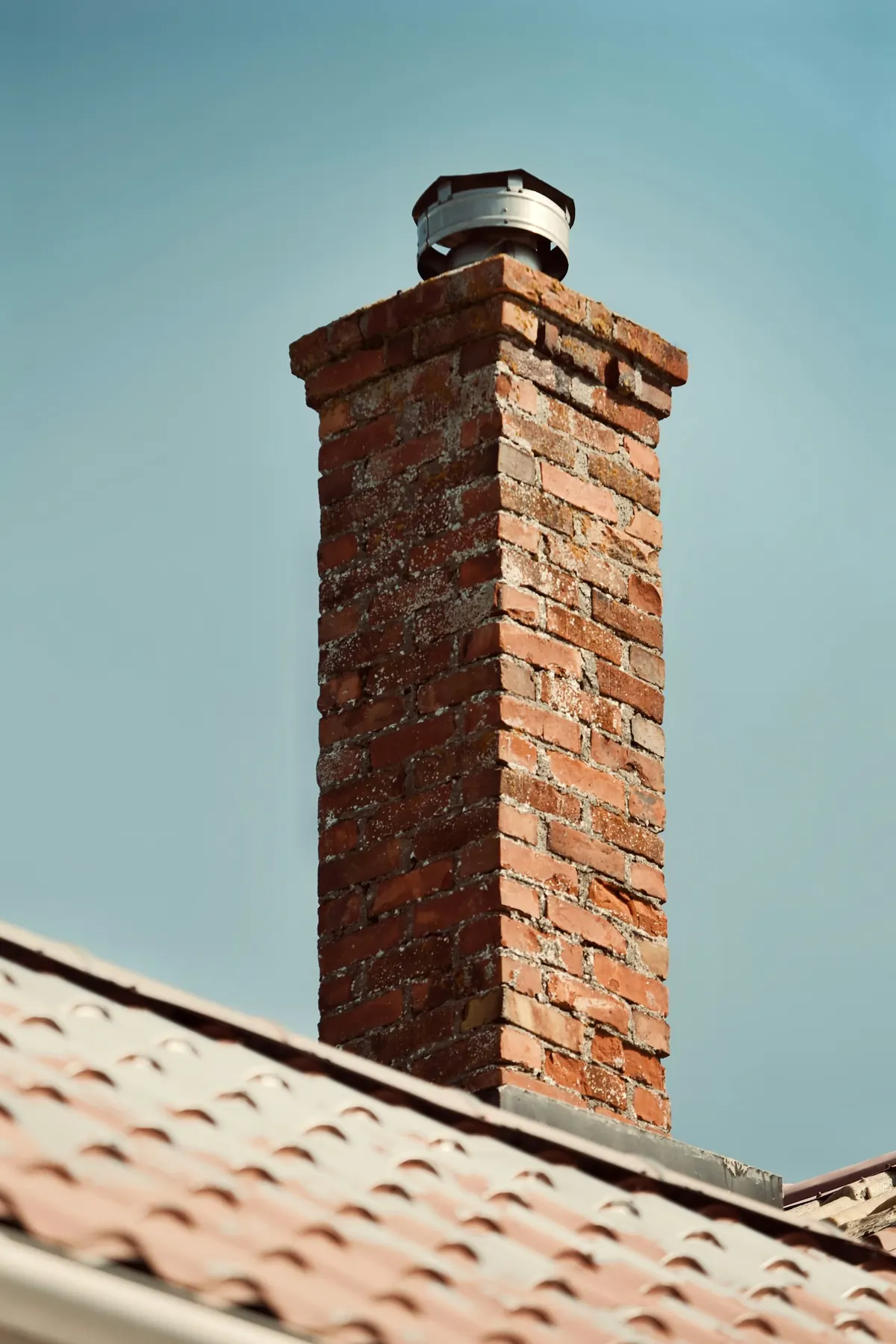
Chimney Relining for Wood Fireplaces, Stoves and Inserts
A new flue inside the old chimney when the clay tiles have cracked, shifted or never existed. Stainless steel typically $900 to $3,800; cast-in-place $2,000 to $7,000.
The flue liner is the part of a chimney nobody sees and the part that keeps heat and smoke away from the wood framing around the stack. The current Minnesota Residential Code is direct about it: masonry chimneys shall be lined, and the lining has to suit the appliance connected to it (IRC R1003.11). Many prewar chimneys in Minneapolis and St. Paul were built with no liner at all, and many later ones have clay tiles that have cracked from a chimney fire or from decades of freezing and thawing.
This page covers liners for wood-burning fireplaces, wood and pellet stoves and inserts. If the flue serves a gas furnace or water heater, Minnesota has its own metal-liner rule, explained on our furnace and water heater liner page. In both cases the free inspection includes a look up the flue, and a camera scan when a hidden problem is suspected is priced at the inspection.
Signs you need this
- Pieces of clay tile in the firebox or on the smoke shelf
- A camera or flashlight shows gaps between tiles or missing mortar joints
- A past chimney fire, even a small one
- You plan to put a wood stove or insert into a fireplace
- Smoke or smell showing up in a room the chimney passes through
How we do it
- Look inside, freeWe check the flue from the top and the firebox and photograph what we see. If the damage is hidden, a camera scan is priced at the inspection.
- Match the liner to the applianceStainless for stoves, inserts and most fireplaces; cast-in-place when the old flue is irregular or the masonry needs strengthening.
- Check what your city requiresSeveral metro cities list chimney liners as mechanical permit work. We check what your city requires before scheduling.
- Install and insulate where neededThe liner runs the full height, with insulation where the clearances or the listing call for it, and is sealed at the top under a cap.
- Test and photographWe check the draft with a fire or the appliance running and leave you photos of the finished flue.
Stainless or cast-in-place
A stainless steel liner is a round flexible or rigid pipe dropped down the existing flue and connected to the stove, insert or fireplace below. It is the common choice for a stove or insert in a masonry chimney, because it gives the appliance a continuous, correctly sized flue. National 2026 guides put it at $900 to $3,800 installed.
A cast-in-place liner is a heat-resistant mix poured or pumped around a form inside the old flue. It fills gaps, follows a crooked flue and adds strength to old masonry, which can make sense in a tall prewar chimney with shifted bricks. It typically runs $2,000 to $7,000.
Code points we build to
These come from the current Minnesota Residential Code, which adopts IRC chapter 10 as mandatory statewide:
- Masonry chimneys shall be lined, suited to the appliance (R1003.11)
- A clay flue lining starts at least 8 inches below the lowest inlet and runs up past the enclosing walls (R1003.12)
- The space around a liner may not be used to vent another appliance (R1003.12.2)
- The flue may not be smaller than the appliance connector (R1003.14)
Why so many old metro flues need it
Freeze-thaw is hard on clay tile and the mortar between the tiles. By our count from NOAA's 1991–2020 normals, the airport sees roughly 75 days a year that freeze at night and thaw by day, and the colder north metro roughly 90. Water that gets past a missing cap or a cracked crown soaks the top tiles and splits them. Inside, condensation from a slow, smoky fire does the same from the other side. When the clay is too damaged to repair, a new liner is the fix.
FAQ
Chimney Liners & Relining questions
Do I need a liner for a wood stove insert?
Yes in practice. The code requires a lining suited to the appliance, and an insert set into an old fireplace flue usually needs a stainless liner run to the top to draft properly and keep its exhaust contained.
Can a cracked clay tile be repaired instead?
Sometimes, when the damage is limited to a few joints near the top. When tiles are split down the flue or missing, relining is the dependable fix. The inspection shows which you have.
Does the liner need insulation?
It depends on the appliance listing and the clearance between the chimney and the framing. Many stove and insert installs call for an insulated liner; we tell you at the inspection whether yours does.
How long does relining take?
A stainless liner in an accessible chimney is usually a one-day job. Cast-in-place takes longer because the material has to set.
Related
Liners, chases, caps and fireboxes
Book online
Choose a day. We'll bring the ladder.
Free inspection in a 3-hour arrival window: 8 to 11, 11 to 2, or 2 to 5, Sunday through Friday. We phone to confirm before we come.