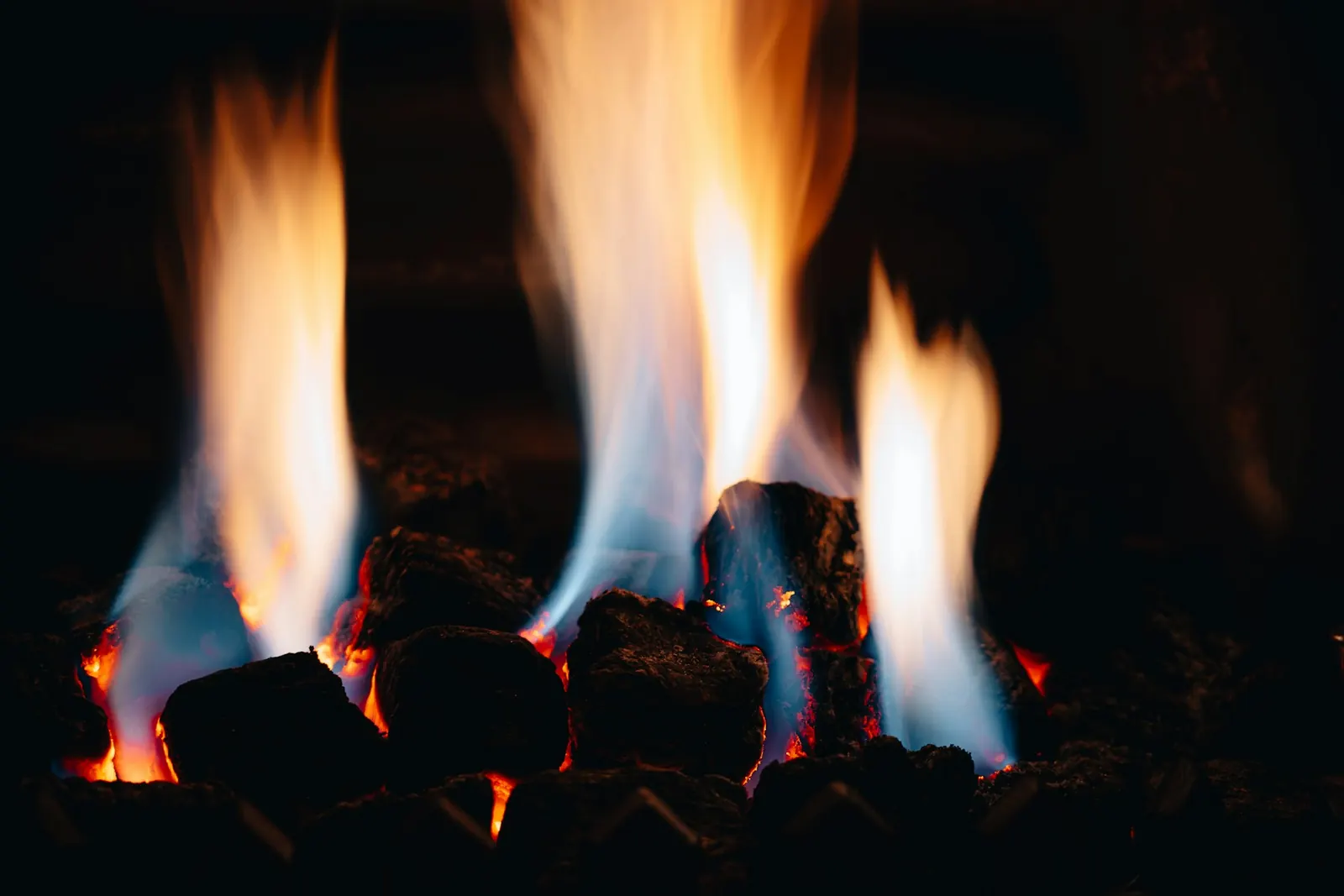
Gas Fireplace Repair When It Won't Light or Stay Lit
Pilot goes out, burner won't come on, igniter clicks with no flame. We find the failed part and replace it with the one made for your model. Most parts $90 to $350; the diagnosis is free.
Gas fireplaces are everywhere in the metro, and most of them are in the homes built since the 1980s. In Lakeville, Blaine, Woodbury and Maple Grove, where the American Community Survey puts the median year built between 1991 and 1999, a glass-front direct-vent fireplace is close to standard. Older houses in Minneapolis and St. Paul often have a gas insert or a log set added to a masonry fireplace. Either way, when the first cold snap of fall arrives, a lot of them won't light.
Most failures come down to a handful of small parts. A thermocouple or thermopile that no longer makes enough voltage, a pilot assembly clogged with dust or spider webs, an igniter that sparks weakly, a gas valve that stops opening. We test each one with a meter, show you the reading and replace the part made for your fireplace's make and model.
Signs you need this
- The pilot lights but goes out as soon as you let go of the knob
- The pilot is on but the main burner won't come on with the switch or remote
- Clicking with no flame on an electronic-ignition unit
- The flame is small, yellow, lazy or leaves soot on the glass
- The fireplace won't turn off with the switch or remote
How we do it
- Diagnose, freeWe read the rating plate, check gas pressure, test the thermocouple or thermopile, the switch, the receiver and the valve, and look at the vent and termination outside.
- Write the repair downYou get the failed part, the reason and the price before we replace anything.
- Replace with the right partWe use the part made for your make and model, not a universal substitute that changes how the unit was tested.
- Clean what caused itThe pilot assembly, burner ports and log placement get cleaned and set, so the new part doesn't fail for the same reason.
- Test a full cycleWe light it, run it, shut it down and relight it, and check the flame and the vent before we leave.
Common problems and the usual parts
Gas fireplace repair is mostly detective work. These are the problems we see most and the parts that typically fix them, with 2026 national price ranges:
- Pilot won't stay lit: thermocouple, typically $150 to $350, or a dirty pilot assembly
- Pilot on, burner won't light: thermopile or gas valve, typically $150 to $300
- Clicking with no flame: igniter, typically $90 to $150, or a weak battery or module
- Weak, sooty or uneven pilot flame: pilot assembly, typically $100 to $350
- Won't turn off: switch, receiver or valve; shut the gas valve to the fireplace and call
Cold weather, snow and direct-vent fireplaces
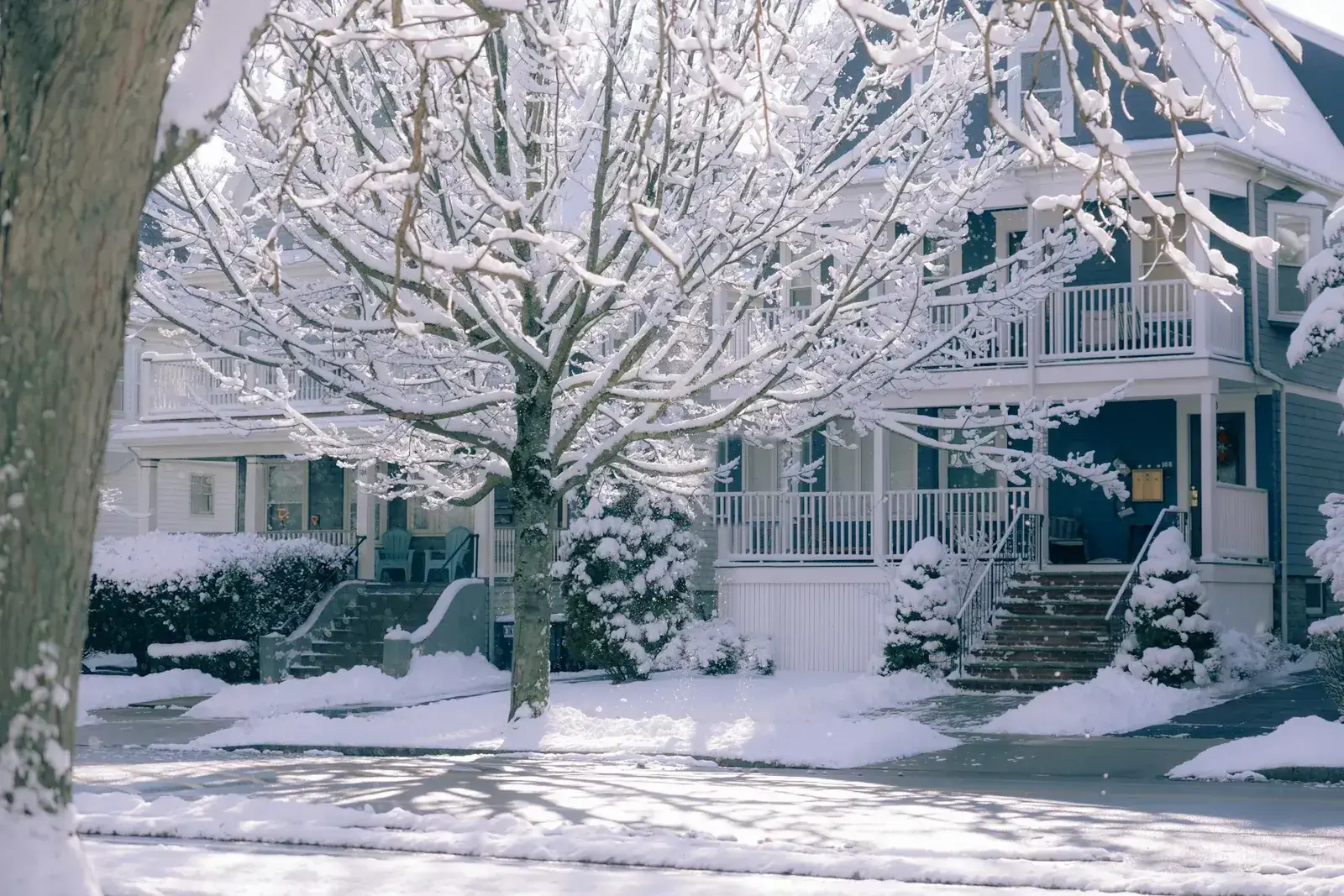
A direct-vent fireplace pulls combustion air and sends exhaust through a terminal on the outside wall or roof. In a metro that averages 51.2 inches of snow and about 90 days of snow on the ground a year (NOAA 1991–2020 normals at MSP), that terminal can end up buried by a drift or crusted with ice. A blocked terminal can make the flame lift, go out or leave soot on the glass. Keep the area around the outside vent clear of snow and ice, and call us if the vent cap looks damaged.
Minnesota's carbon monoxide alarm law (Minn. Stat. 299F.51) requires an approved, working CO alarm within 10 feet of every room used for sleeping. If an alarm sounds or you smell gas, leave the house, then call 911 and your gas utility from outside.
When a repair turns into a replacement
Many fireplaces from the 1990s are now over 25 years old. Some parts are discontinued, and a valve or control board on an old unit can cost enough that a new insert or fireplace becomes the better choice. We tell you honestly when that point has been reached. Replacing the unit is a different job from a part swap: Brooklyn Park lists gas fireplaces on its mechanical permit list, and Minneapolis says most gas work needs a mechanical permit, while its exempt list covers replacing a minor part that does not alter the approval of the equipment. We check what your city requires.
FAQ
Gas Fireplace Repair questions
Why won't my gas fireplace stay lit?
Most often the thermocouple or thermopile is worn out and no longer holds the gas valve open, or the pilot flame is too weak to heat it because the pilot is dirty. A meter test tells which. A thermocouple typically runs $150 to $350 and a thermopile $150 to $300.
The pilot is on but the fireplace won't turn on. What's wrong?
Common causes are a weak thermopile, a bad wall switch or remote receiver, dead batteries, or a gas valve that won't open. We test each one in order during the free diagnosis.
Should my gas fireplace pilot be on all the time?
Older standing-pilot units have a pilot that burns constantly unless you turn it off. Many owners turn it off for summer and relight in fall. Newer units with intermittent ignition light the pilot only when you call for heat.
Is it safe to keep using a fireplace that leaves soot on the glass?
Soot means the gas isn't burning cleanly, often from misplaced logs, a dirty burner or a blocked vent. Stop using it until it's checked, and make sure your CO alarms are working.
What should I do if I smell gas near my fireplace?
Don't use any switches or the fireplace. Leave the house, then call 911 and your gas utility from outside. Once the gas has been made safe, we can diagnose the fireplace.
Book online
Choose a day. We'll bring the ladder.
Free inspection in a 3-hour arrival window: 8 to 11, 11 to 2, or 2 to 5, Sunday through Friday. We phone to confirm before we come.