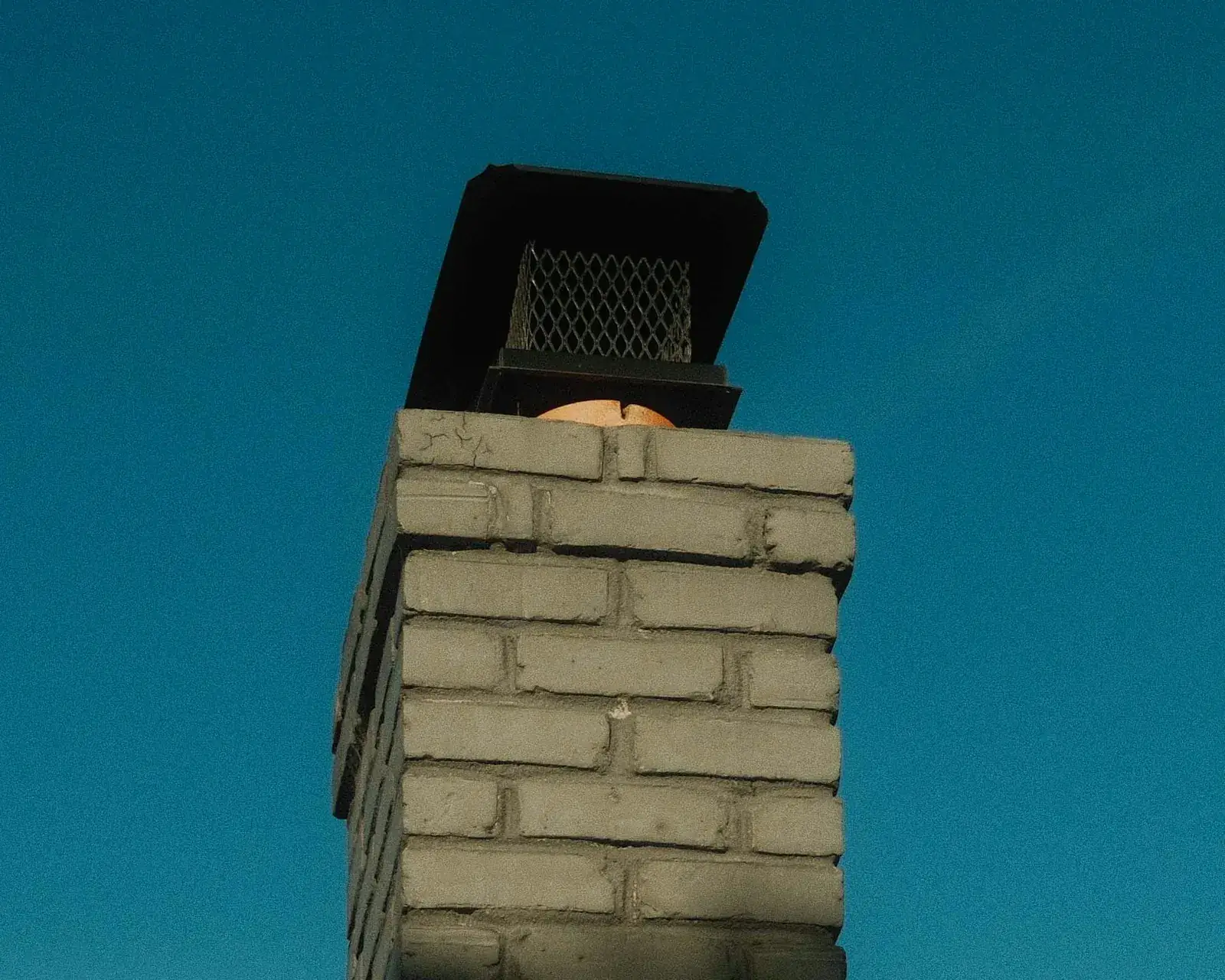
Does Minnesota require a metal liner for a gas furnace or water heater in a brick chimney?
Yes. Minnesota's fuel gas code, Minn. R. 1346.5501, says an approved metallic liner shall be installed in masonry chimneys used to vent gas appliances. It sets minimum thicknesses for aluminum and stainless steel, accepts a listed vent system instead, and bans connecting any appliance to a flue that serves a fireplace.
Minneapolis Fireplace & Chimney · November 10, 2026
Where the rule lives
Minnesota adopts the International Fuel Gas Code through chapter 1346 of the Minnesota Rules and then rewrites certain sections. Part 1346.5501 covers section 501, the general venting rules, and the version of 501.12 printed there is Minnesota's own wording. Its opening line is plain: an approved metallic liner shall be installed in masonry chimneys used to vent gas appliances.
A second amendment, 503.5.6, deals with chimneys that are already in service. As shown for Minnesota on UpCodes, it says existing chimneys shall be lined in accordance with 501.12 unless the building official approves otherwise. So the age of the house does not, by itself, settle the question. The local building official is the one who can sign off on something different.
This matters in a metro where gas is the main heat in most homes. Census ACS 2024 five-year figures put utility gas as the heating fuel in roughly 58 to 88 percent of occupied homes in every city we checked, from Hopkins at the low end to Blaine at the high end.
Which liners meet the rule
Rule 1346.5501 lists the materials and the minimum thickness for each. Anything thinner, or a flexible duct sold for some other purpose, does not qualify.
- Aluminum (1100 or 3003 alloy or equal): at least 0.032 inch thick, for liners up to 8 inches in diameter.
- Stainless steel (304 or 430 or equal): at least 26 gauge (0.018 inch) under 8 inches in diameter.
- Stainless steel 8 inches and larger: at least 24 gauge (0.024 inch).
- A listed vent system installed to its listing, in place of the above.
- The one exception is for chimneys where every connected appliance is rated over 400,000 Btu per hour, which rules out houses.
Why a brick flue struggles with gas exhaust
Burning natural gas makes water vapor. A furnace or water heater sends that vapor up the flue with the rest of the exhaust, and if the flue walls are cold and the passage is much larger than the appliance needs, the vapor cools before it reaches the top and condenses on the inside of the chimney. That moisture is mildly acidic. Over years it softens the mortar joints, flakes the clay tiles and can leave a pile of debris at the base of the flue.
NOAA's 1991–2020 normals for the MSP airport show about 147 nights a year at or below freezing and about 22 nights at or below zero. An exterior brick chimney spends much of the heating season ice cold on the outside, which is exactly when a gas appliance is running hardest.
Signs we look for include white staining or flaking brick high on the outside of the stack, rust or tile fragments at the cleanout, and a water heater whose draft hood spills warm air instead of pulling it in.
The fireplace flue is off limits
Minnesota's amended 501.7 reads: connection of any appliance to chimney flues serving fireplaces is prohibited. A furnace or water heater has to have its own flue or its own vent. If you look at an older chimney from the roof and see two or three openings, that is usually why: one for the fireplace and one for the heating equipment.
Older two-unit buildings deserve a close look. ACS figures show 8.1 percent of Minneapolis housing units and 6.3 percent in St. Paul are in two-unit buildings, many of them with two furnaces sharing one brick stack. Each appliance connection, and the flue it ends up in, has to be sized and lined correctly.
Aluminum or stainless, and the cost
An aluminum liner is approved for gas appliances only. HomeGuide puts an installed aluminum gas liner at $625–$2,250 and gives it a working life of roughly 5 to 15 years. A stainless steel liner, installed, typically runs $900–$3,800 and is the better choice when the chimney is tall, the appliance is a high-output boiler, or there is any chance the flue will someday serve something else.
The liner is sized to the appliance, not to the chimney. Minnesota's fuel gas rules include Category I vent sizing tables, and the diameter that comes out of them is usually much smaller than the old clay flue. Most heating and gas piping work in Minneapolis needs a mechanical permit, and Brooklyn Park lists "Chimney / Chimney liner" on its homeowner mechanical permit list. We check what your city requires before the job is scheduled.
Getting your flue checked
Our inspection is free. We look at the chimney from the roof and from the basement, check where the furnace and water heater connect, photograph the flue and hand you a written price before any work. Visits run Sunday through Friday in 3-hour windows.
FAQ
More answers
My chimney has a clay tile liner. Is that enough for my gas furnace?
Under Minn. R. 1346.5501 the liner for gas venting in a masonry chimney is metal or a listed vent system. Amended 503.5.6 says existing chimneys are lined to that standard unless the building official approves otherwise, so a clay flue alone is not the default answer.
Can my water heater share the fireplace flue if the fireplace is never used?
No. Amended 501.7 prohibits connecting any appliance to a flue that serves a fireplace, whether or not anyone burns wood in it.
How long does a liner job take?
Most furnace and water heater relines are a single visit once the liner is on hand. A chimney that needs repair at the top first, such as a cracked crown, can add a day.
Keep reading
More from the blog
 What happens to the water heater when a new furnace stops using the chimney?A new side-vented furnace can leave the water heater alone in an oversized brick flue. What IFGC 501.15 says about resizing, and how the fix works in Twin Cities homes.
 Is the winter leak in my ceiling an ice dam or the chimney?Water on the ceiling after a thaw can be an ice dam or a leaking chimney. Where the stain shows, what UMN Extension says about ice dams, and what each repair costs.
 How does Minnesota's freeze-thaw cycle damage a chimney crown?Why the concrete crown on top of a brick chimney in the metro cracks, how often MSP swings across freezing, and when to repair or replace.
Book online
Choose a day. We'll bring the ladder.
Free inspection in a 3-hour arrival window: 8 to 11, 11 to 2, or 2 to 5, Sunday through Friday. We phone to confirm before we come.