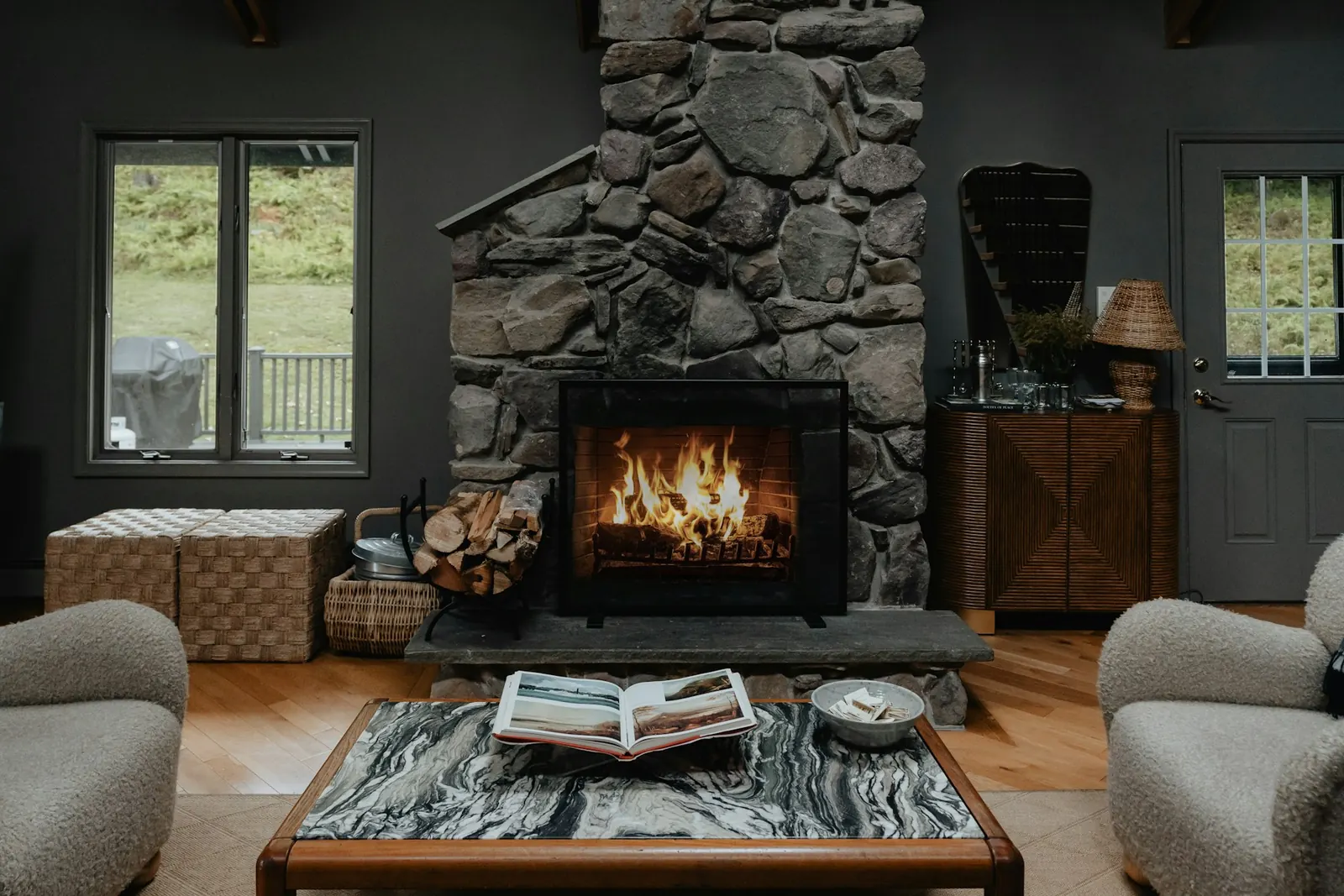
Where do carbon monoxide alarms have to go in a Minnesota home with a fireplace?
Minnesota law, Minn. Stat. 299F.51, requires an approved, working carbon monoxide alarm within 10 feet of every room lawfully used for sleeping. That applies to every single-family home and every unit in a multifamily building. Having a fireplace does not change the legal rule, but an extra alarm on the fireplace level is cheap insurance on top of it.
Minneapolis Fireplace & Chimney · October 28, 2026
What the statute says
Section 299F.51 is short. Every single-family dwelling and every dwelling unit in a multifamily dwelling must have an approved and operational carbon monoxide alarm installed within 10 feet of each room lawfully used for sleeping. In a multifamily building, the owner installs and replaces missing or disabled alarms, and occupants keep them in working order. No one may remove batteries or otherwise disable a required alarm.
Enforcement is mild. A first violation brings a safety warning; a second is a petty misdemeanor. The real cost of skipping it is not the fine.
Placing alarms in a home with a fireplace
Ten feet from each bedroom door is the legal floor. In a house where two bedrooms share a hallway, one alarm in the hall can cover both if it sits within 10 feet of each. Bedrooms on different floors need their own coverage.
Beyond that, follow the alarm maker's instructions, which usually say to keep it away from the fireplace opening itself, out of dead-air corners and away from windows and kitchen appliances that can set it off. These are the places we suggest adding one:
- On the main floor, in the room with the fireplace or insert, on a wall several feet from the opening.
- In the basement near the furnace and water heater, especially if they still vent into a brick chimney.
- Near a finished basement bedroom or guest room, within the 10 feet the law requires.
- On each level of a split-level home, where a fireplace on one level can be well away from bedrooms on another.
Why a fireplace raises the stakes
Carbon monoxide comes from incomplete burning of any fuel. A wood fire that smolders with the damper half shut, a gas insert with a blocked vent, or a water heater that loses its draft can all push it into the house. A 2025 Golden Valley city notice described CO as odorless, colorless and tasteless and listed headache, nausea, ringing in the ears and lethargy among the symptoms. Its advice: go outside and call for help.
Minnesota's fuel gas rules matter here too. Amended IFGC 501.7 bans connecting a furnace or water heater to a flue that serves a fireplace, and amended 501.12 calls for a metal liner in masonry chimneys that vent gas appliances. A chimney that breaks either rule is a CO risk worth fixing, not just a code item.
What alarms cannot do
An alarm tells you CO is already in the house. It does not tell you why. If one goes off, get everyone outside, call 911, and do not go back in until responders say it is safe. Then have the fireplace, furnace and water heater venting checked before using them again.
Prevention is the inspection. NFPA 211 calls for chimneys, fireplaces and vents to be inspected at least once a year. Ours is free and covers the fireplace or stove, the flue, and where the furnace and water heater connect. We also note alarm placement while we are there.
FAQ
More answers
Does a combination smoke and CO alarm count?
The statute requires an approved, working CO alarm. A listed combination unit placed within 10 feet of each sleeping room meets the placement rule. Check the label to be sure it detects carbon monoxide.
I rent my home. Who installs the alarm?
Under 299F.51 the owner of a multifamily building installs and replaces the alarms. The occupant keeps them in repair and must not disable them.
Is the CO alarm on the seller's disclosure?
Yes. The standard Minnesota Realtors disclosure asks whether the carbon monoxide detector is in working order, alongside the fireplace and wood stove.
Does an electric fireplace need a CO alarm nearby?
An electric fireplace burns no fuel, so it makes no CO. The legal requirement near the bedrooms still applies to the house.
Keep reading
More from the blog
 Does Minnesota require a metal liner for a gas furnace or water heater in a brick chimney?What Minn. R. 1346.5501 says about metal liners in brick chimneys that vent a gas furnace or water heater, which liners qualify, and what relining costs.
 What happens to the water heater when a new furnace stops using the chimney?A new side-vented furnace can leave the water heater alone in an oversized brick flue. What IFGC 501.15 says about resizing, and how the fix works in Twin Cities homes.
 Is the winter leak in my ceiling an ice dam or the chimney?Water on the ceiling after a thaw can be an ice dam or a leaking chimney. Where the stain shows, what UMN Extension says about ice dams, and what each repair costs.

Book online
Choose a day. We'll bring the ladder.
Free inspection in a 3-hour arrival window: 8 to 11, 11 to 2, or 2 to 5, Sunday through Friday. We phone to confirm before we come.